- +91 7701934257

- +91 7701934257
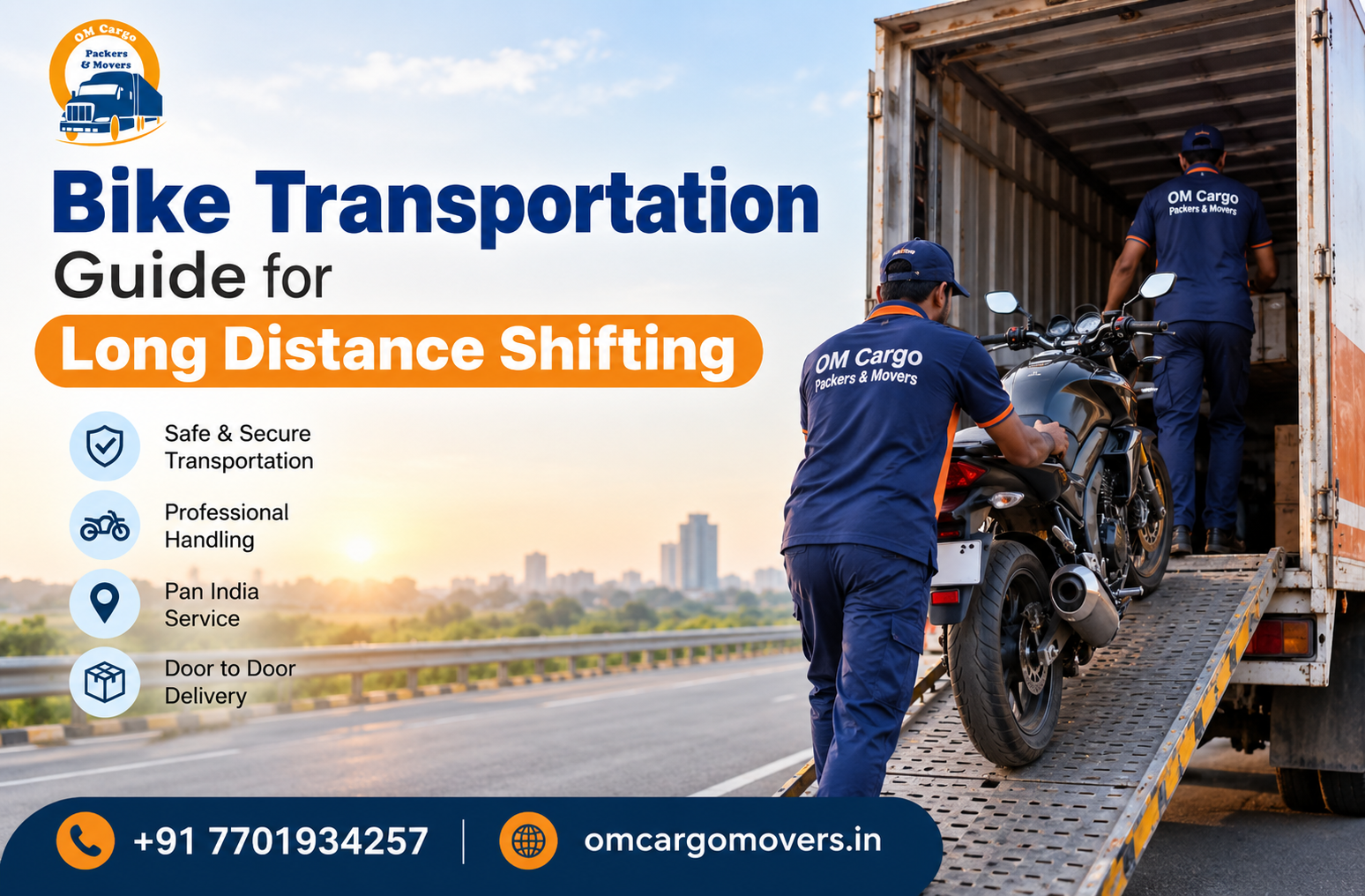
Bike Transportation Guide for Long Distance Shifting
Bike Transportation Guide for Long Distance Shifting 2026
Packing up a house is hard enough. Then somewhere between the last cardboard box and the flight ticket, the question shows up: what happens to the bike?
Riding it yourself sounds like a plan right up until you actually map out 1,200 km on two wheels. Fuel stops, hotel nights, sore shoulders, and a bike that’s already tired before it even reaches your new city. Past 300-400 km, most people quietly give up on the “ride it there” idea and look for a transporter instead — and honestly, that’s the sensible call.
This guide covers the real process of shifting a bike long distance in India — the transport options, the paperwork nobody warns you about, what it actually costs, and the small slip-ups that cause the big problems.
Why This Needs More Than a Quick Google Search
A bike isn’t cargo in the usual sense. It has a fuel tank that can’t travel full, a battery that drains if it sits too long, mirrors that snap off if someone stacks a crate on them, and — let’s be honest — a fair bit of emotional value attached to it too.
Get the planning wrong and you could end up overpaying, waiting an extra week, or opening the delivery truck to find a scratched tank and a missing side panel. None of that is unusual. It’s also all avoidable.
The Three Ways to Move a Bike Across Cities
India gives you three realistic options here, and each one suits a different kind of mover.
1. Professional Packers and Movers
This is the route most people end up choosing, mainly because it’s the least amount of running around. A company like Om Cargo Movers picks the bike up from your doorstep, packs it properly, and drops it off at the new address — no station visits, no parcel-office queues.
It works out particularly well if you’re shifting your whole household anyway. Many movers transport your bike along with your furniture and boxes in the same vehicle, which usually costs less than booking the bike separately, since our Domestic Relocation Services already cover exactly this kind of combined move.
Two setups are common here:
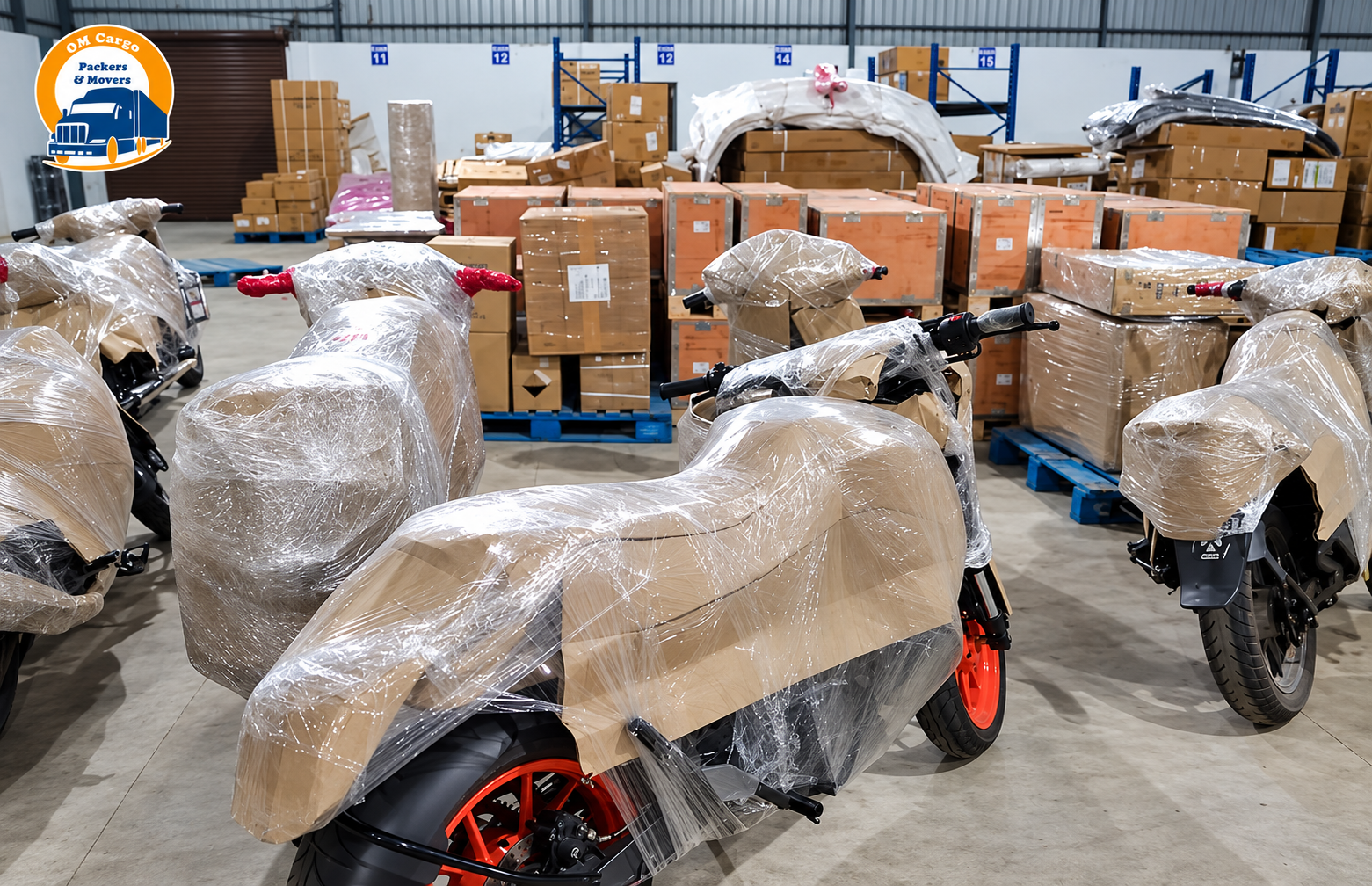
- Shared carrier transport – your bike rides on an open or enclosed multi-vehicle carrier along with other two-wheelers. Takes roughly 3 to 7 days depending on the route.
- Dedicated door-to-door transport – your bike gets packed and moved on its own. Costs more, but makes sense for a newer or higher-value motorcycle.
2. Indian Railways Parcel Service
Railways remain the cheapest way to move a bike across the country, and Indian Railways runs this service across a network of more than 67,000 km, so availability is rarely the problem — patience is. You can book it as luggage if you’re travelling on the same train, or as a parcel if you’re sending it on ahead without you.
The process, in short:
- Head to the parcel office at your nearest station, or book through the Indian Railways parcel portal.
- Pick luggage or parcel service, depending on whether you’re travelling with the bike.
- Hand over your documents and get the bike weighed.
- Pay up and keep the railway receipt safe — you’ll need it to collect the bike at the other end.
Expect delivery somewhere between 2 and 7 days. It’s cheap, but you’re doing the packing, the station visit, and the paperwork yourself unless you rope in an agent to handle it for you.
3. Bus and Courier-Network Parcel Services
Bus parcel counters and logistics networks like DTDC or VRL offer a third, budget-friendly option, mostly useful for shorter intercity routes rather than genuine cross-country moves. The bike rides through a general cargo network instead of a dedicated carrier, so it’s cheaper — usually by 20-30% — but you get less visibility into how carefully it’s actually being handled along the way.
Fine if the budget is tight and the distance is manageable. Not ideal for a bike you’d lose sleep over.
Documents to Keep Ready
Regardless of the method, keep these on hand — originals plus a couple of photocopies:
- Vehicle Registration Certificate (RC)
- Government photo ID — Aadhaar, PAN, driving licence, or passport
- Insurance policy copy
- Pollution Under Control (PUC) certificate, where it applies
For railway bookings especially, the name on your RC usually has to match your ID. Worth checking this the night before, not while standing at the parcel counter with a queue building up behind you.
Prepping the Bike Before Handover
A bit of prep now saves a lot of arguing later.
- Drain the fuel tank. Non-negotiable for train transport — Indian Railways strictly prohibits carrying fuel, and getting caught with a full tank can mean a fine running into thousands of rupees.
- Give it a proper wash. A clean bike makes existing scratches obvious, which matters if you need to prove new damage happened during transit rather than before.
- Photograph everything. Odometer, tyres, mirrors, any old dents — all before handover. This becomes your evidence if something looks different on delivery day.
- Take off loose accessories. Mobile holders, saddlebags, custom parts — anything that isn’t bolted down tends to go missing during loading.
- Check on the battery. Some transporters recommend disconnecting it for longer transit windows to stop it from draining out completely.
What Actually Decides the Price
Bike shifting charges in India generally land somewhere between ₹2,000 and ₹15,000. There’s no single fixed rate, so it helps to know what pushes the number up or down.
- Distance matters most. A short intercity hop costs a fraction of a full interstate move spanning a thousand-plus kilometres.
- Bike type changes things too — a 150cc commuter costs less to shift than a heavy cruiser or a 250cc+ sports bike that needs extra padding and careful crating.
- Mode of transport swings the price the most. Railway parcel is usually cheapest; dedicated door-to-door carrier service costs more but gives you far tighter control over handling.
- Timing and demand play a quiet role as well. Truck availability on a given day, or a seasonal rush of relocations, can mean two people on the same route get two different quotes.
Getting two or three quotes before you book is a good habit — not to squeeze the price down endlessly, but to catch the provider who quotes low upfront and adds “extra charges” later.
Don’t Skip the Insurance
Transit insurance is one of those line items people skip to save a few hundred rupees, and then regret the one time something actually goes wrong. It typically costs 1-2% of your bike’s declared value and covers accidental damage, fire, and theft while it’s in transit.
Skip it, and a damaged fairing becomes a fight with the transporter. Take it, and the same situation becomes a claim form. That’s really the whole trade-off.
Choosing a Transporter You Can Trust
The packers and movers industry has its share of fly-by-night operators, so it’s worth checking a few things before you book anyone:
- Are they GST registered? Ask for the GSTIN — a legitimate company will show it on the invoice without hesitation.
- Do they give you a written estimate, or just a number over the phone with no paper trail?
- Are they IBA approved, or ISO certified? These aren’t just badges — IBA approval means the company has been vetted against the Indian Banks’ Association’s criteria for relocation vendors.
- Do they ask for a large cash advance before any paperwork is signed? That’s one of the most common red flags in this industry.
Om Cargo Movers has been operating out of Chandigarh since 2010, and is ISO 9001:2015 certified, IBA approved, and GST registered — the kind of paperwork worth checking for with any provider you shortlist, not just us. If you want the fuller picture of what to watch out for, our guide to avoiding packers and movers fraud in India walks through the common scam patterns in more detail.
Delivery Day: Don’t Just Sign and Ride Off
When the bike arrives, resist the urge to just accept it and go.
- Compare it against the photos you took before handover.
- Check the odometer reading.
- Test the horn, lights, and brakes before taking it out on the road.
- If anything looks off, flag it with the transporter on the spot and photograph the damage immediately.
Delivery running a day or two behind the estimate is fairly normal, so don’t plan a highway ride for the same evening the bike is due.
Mistakes Worth Avoiding
- Booking whoever quoted the lowest number, without checking their credentials
- Forgetting to drain the fuel tank before a railway booking
- Skipping insurance to save a small amount upfront
- Not photographing the bike before handover
- Booking last-minute during a peak relocation season, when good slots vanish fast
Most of these come down to planning ten minutes ahead — which, at this point, you’ve already done just by reading this far.
Final Word
Long-distance bike shifting doesn’t have to be a gamble. Pick the right transport method, keep your documents in order, prep the bike properly, and choose a company that can actually back up its claims with paperwork — and your bike shows up in one piece while you’re busy unpacking everything else.
If you’re relocating and want your two-wheeler handled by a team that’s been doing this since 2010, Om Cargo Movers’ Car & Bike Transportation service is built for exactly this kind of move. You can also check our full range of relocation services or get in touch for a free quote before your move date sneaks up on you.