- +91 7701934257

- +91 7701934257
How to Pack Kitchen Items for a Safe Move
How to Pack Kitchen Items for a Safe Move 2026
Packing a bedroom is a Sunday afternoon job. Fold the clothes, zip the bag, done.
The kitchen is a different animal altogether. Glass, steel, ceramic, a mixer-grinder with three attachments you’ve used exactly once, and enough dabbas to stock a small provision store. Most people leave it for the last day of packing and then regret it around midnight, wrapping coffee mugs in bedsheets because the packing paper ran out an hour ago.
This piece walks through how to pack kitchen items for a safe move without that midnight panic — practical steps, a few things people get wrong, and where hiring help actually makes sense.
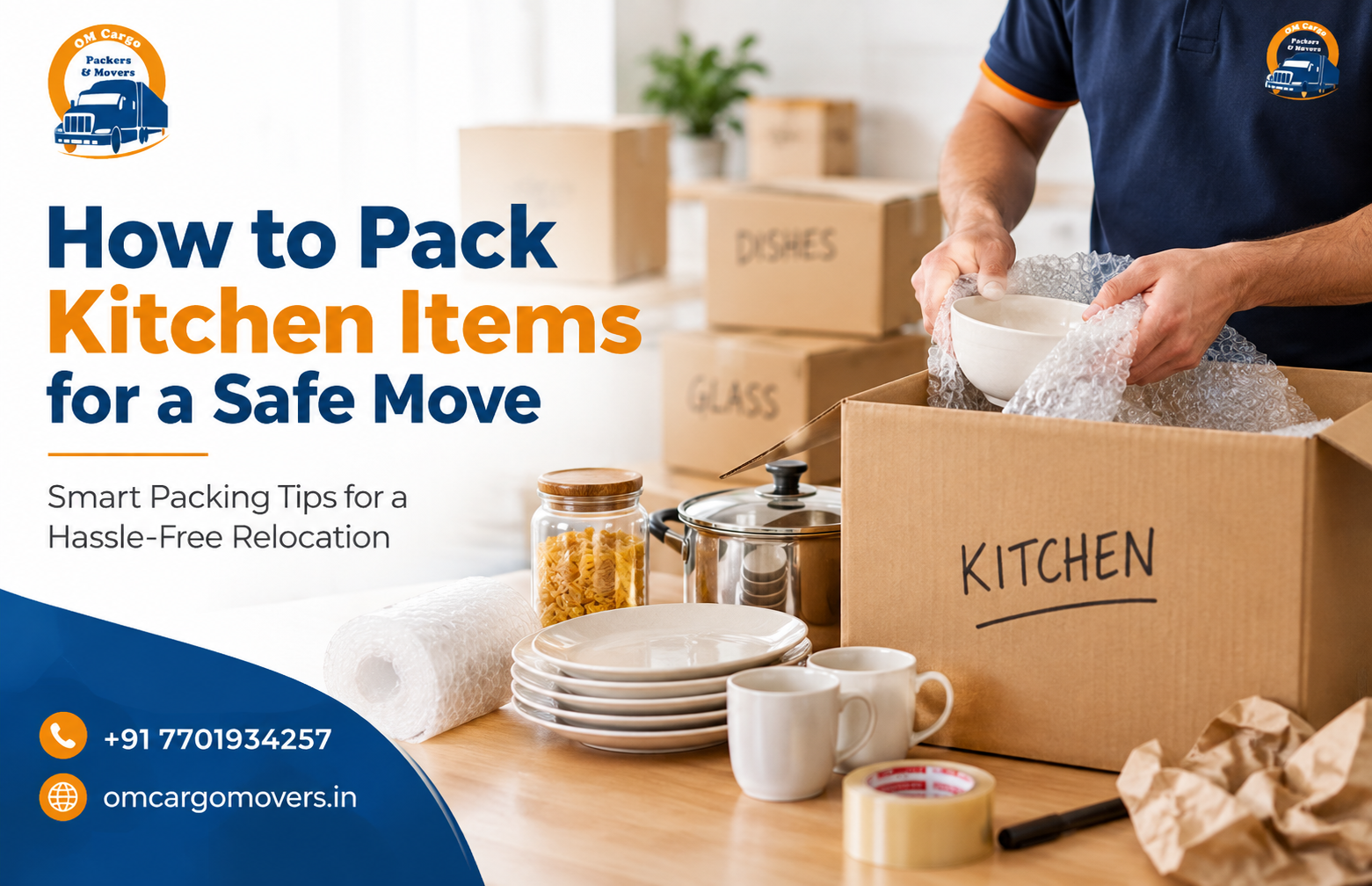
Why the Kitchen Takes Longer Than You Think
People underestimate the kitchen. It isn’t just utensils; it’s glassware, crockery, non-stick cookware, small appliances, a pantry shelf, and usually a pressure cooker whistle that’s gone missing since 2023.
Industry estimates put a typical Indian kitchen at 8 to 15 packed boxes, with the whole job taking 6 to 10 hours spread over two or three days for a normal household. A bigger kitchen with more crockery can easily cross 20 boxes.
That’s not a one-evening task. Plan around it instead of squeezing it into the night before.
Start By Throwing Things Out
Before any box comes out, go through your kitchen honestly and sort everything into three piles:
- Keep — what you genuinely use
- Donate or sell — working items you don’t need anymore
- Bin it — chipped bowls, expired spices, that lone lid with no matching container
Every kitchen has stuff that hasn’t been touched in over a year. Be a little ruthless. Less clutter means fewer boxes, less packing material, and often a smaller bill, since moving costs usually track the volume you’re shifting — something worth checking on our packers and movers charges page if you’re moving within Panchkula.
Deal With the Pantry First, Not Last
Food is the part people forget until packing day is already underway, and then it becomes a mess.
Use up perishables in the week before the move instead of restocking them. Anything half-opened or close to expiry, just discard it. Sealed dry goods like rice, atta, and dal go into small, sturdy boxes — heavy items in big boxes become genuinely hard to lift, and someone’s back will thank you later. Tape the caps on oil bottles and pickle jars, then stand them upright in a box lined with old cloth or newspaper.
One thing worth knowing before moving day: most moving companies will not carry LPG cylinders, open liquids, or perishable food in the truck. Get the cylinder checked by a technician, have it disconnected, and carry it yourself in your own vehicle.
Get the Right Materials Before You Start
A few boxes and some old newspaper won’t cut it for a kitchen. Keep these ready:
- Boxes in small, medium, and large sizes
- Packing paper (avoid using printed newspaper directly on white crockery — the ink transfers)
- Bubble wrap for anything glass
- Cling wrap for cutlery trays and loose items
- Strong tape and a permanent marker
Resist grabbing whatever boxes the kirana store has lying around. Different sizes don’t stack evenly in a truck, and the gaps between mismatched boxes are exactly where things shift and crack during transit.
Packing Crockery and Glass — Where Most Damage Happens
Plates and trays. Wrap each one separately and pack them standing on edge, like records in a crate — never stacked flat. Standing them vertically spreads the pressure evenly instead of letting the weight sit on the bottom plate.
Glasses, cups, bowls. Wrap each piece on its own, tucking a bit of paper inside the glass too for cushioning. Line the box with crumpled paper first, and don’t leave any gaps once everything’s in — loose items are the ones that break.
Cutlery. Bundle spoons and forks together with a rubber band before wrapping. If they’re already sitting in an organiser tray, just wrap the whole tray in cling wrap and move it as is.
Knives. Never toss a bare blade into a box. Wrap each one in a thick cloth or cardboard, tape it shut, and keep all the blades facing the same direction in a box marked “Sharp — Handle With Care.”
Cookware and Appliances
Nest your pots and pans — smaller inside bigger — with a sheet of paper between each to stop scratching, and wrap lids on their own. Non-stick cookware needs a layer of foam or soft cloth so the coating doesn’t rub against anything on the way.
Small appliances go back into their original boxes if you kept them. If not, wrap each one in bubble wrap and cushion it on all sides inside a sturdy box. Big appliances like the microwave or fridge should be cleaned, dried, and unplugged a day ahead, with loose shelves and trays wrapped separately.
Label Every Single Box
Two minutes here saves two hours later. Write the room and contents on each box — “Kitchen: Glassware, Fragile” or “Kitchen: Pantry, Keep Upright” — and mark fragile ones on more than one side so it’s visible from any angle in the truck. It also helps whoever’s carrying your boxes handle them the way they actually need to be handled.
Pack One Box Last — Your Essentials Box
Set this one aside and pack it dead last, then unpack it first at the new place. A few plates and cutlery, one basic pot, tea and coffee with a kettle, dish soap, and a hand towel. It’s a small thing, but it’s the difference between cooking a simple breakfast on day one and ordering food for three days because the good crockery is buried under six unmarked boxes.
A Few Mistakes Worth Avoiding
Don’t pack wet or unwashed utensils — they’ll smell by the time you unpack. Don’t overload one box with heavy items just because there’s space left; it becomes unliftable. Don’t leave gaps inside boxes, and don’t skip the labelling, unless opening ten boxes to find a bottle opener sounds like a fun way to spend an afternoon.
When It Makes Sense to Call in Help
You can pack a kitchen yourself, and plenty of people do it well with some patience and the right materials. But for a long-distance move, a bigger family, or a kitchen full of delicate glassware and appliances, professional packers cut down breakage considerably and save you a couple of exhausting days.
That’s the part of moving we handle at Om Cargo Movers. If you’re relocating an entire household, not just the kitchen, our home shifting service covers packing, loading, transport, and unpacking end to end. Anyone specifically in the Tricity area can check our packers and movers in Panchkula page for local pricing and availability, or look at our complete moving checklist for Panchkula if you’re planning the whole move, not just the kitchen. And before you hire anyone — us included — it’s worth a quick read of how to avoid packers and movers fraud in India, because a written estimate and verified GST details save people a lot of grief.
Frequently Asked Questions
What is the safest way to pack dishes for moving?
Wrap each dish individually with packing paper, add bubble wrap if needed, pack dishes vertically, and fill empty spaces with cushioning material.
Should glasses be packed upright or sideways?
Always pack glasses upright. This position helps reduce pressure on the rims and lowers the risk of breakage.
Can I use towels instead of bubble wrap?
Clean kitchen towels can provide extra cushioning for sturdy cookware. However, fragile glassware and fine china should still be wrapped with proper packing paper or bubble wrap for better protection.
Should I move food when relocating?
You can move sealed, non-perishable food if it’s allowed by your moving company. Consume, donate, or dispose of perishable food before moving day.
Bottom Line
Packing a kitchen isn’t fun work, but it rewards patience. Sort first, pack by category, protect anything fragile properly, and label every box like your future self depends on it — because two weeks from now, she will.
Whether you pack it yourself over a weekend or bring in a team, a properly packed kitchen means fewer surprises on moving day. Get in touch with Om Cargo Movers for a free quote if you’d rather leave the packing to people who do it every day.